Pet Friendly House Cleaning: Safe, Eco-Friendly Practices
Make pet friendly house cleaning simpler with safer product choices and practical routines. Get your free Kay's Cleaning quote: (813) 725-1831.
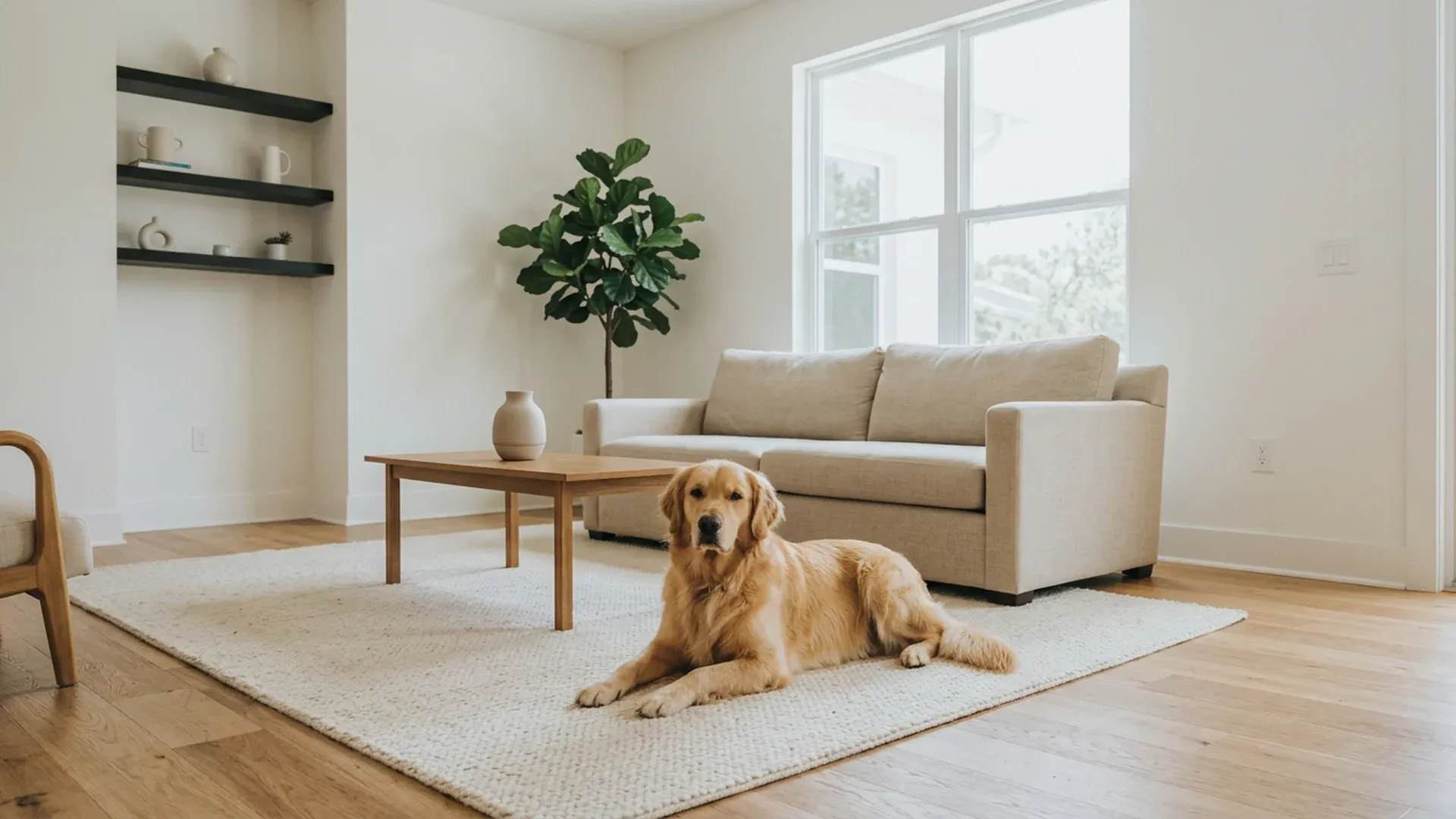
Pet friendly house cleaning combines effective dirt removal with product choices and routines that limit pets' contact with cleaning chemicals. Pairing it with eco-friendly habits means checking labels, using only the amount directed, and removing hair and dust before reaching for stronger products. A fresh smell alone does not prove a room is clean or ready for paws.
We recommend starting with the surfaces your pet touches, not a shopping list of products advertised as green. This guide brings pet safety and environmental choices together, while our house cleaning service guide explains the broader routine.
What makes pet friendly house cleaning safer and greener?
A safer, greener routine matches each task to a suitable product and keeps pets away during use. It is not a promise that any cleaner is harmless. A dog's paws, a cat's grooming habits, and an animal's medical history all matter when you plan a cleaning session.
Begin with a simple household checklist:
- Identify floors, fabrics, and counters that need different care.
- Read the product's dilution, rinsing, and access instructions.
- Remove bowls, toys, and bedding from the work area.
- Arrange a comfortable room away from cleaning activity.
For pet friendly house cleaning, prevention belongs beside product selection. A closed supply cupboard and a protected drying area can be more useful than an extra scented spray. Ask your veterinarian about individual sensitivities rather than treating a marketing label as medical advice.
How do you choose pet safe cleaning products?
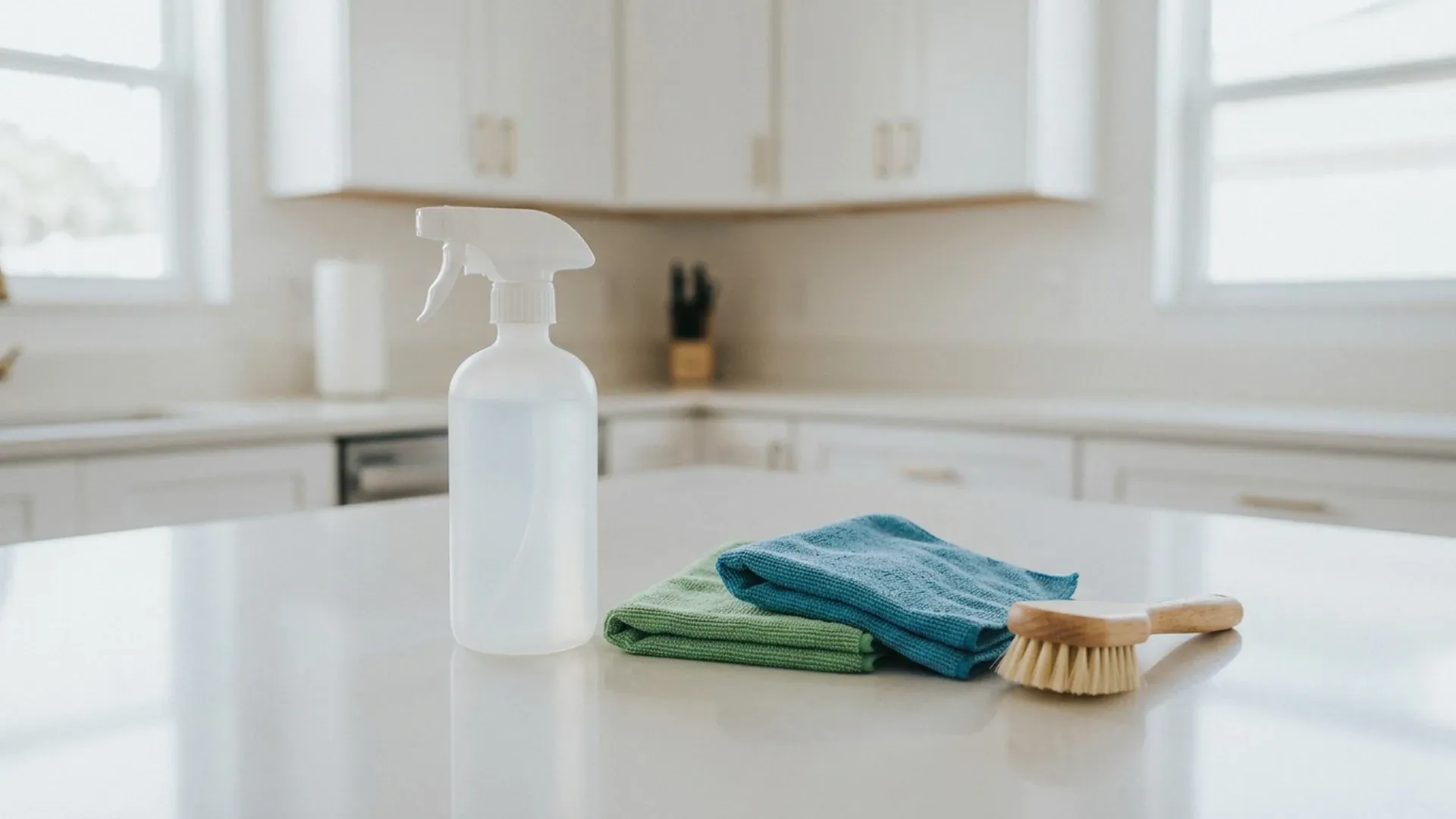
Pet safe cleaning products should be chosen by their labeled use, surface compatibility, and instructions for animals, not by a paw symbol on the package. The ASPCA's household product guidance says most cleaning products can be used around dogs and cats when label directions are followed; birds need particular veterinary advice because of fume sensitivity.
Keep the original packaging so you can check ingredients and directions later. If you use a permitted diluted solution, label the container and store it securely. Never put cleaner in a beverage bottle or leave a bucket where a curious animal can drink.
Tell us about fragrance preferences and pet concerns before a visit. Product approval for your household should be a conversation, especially when your veterinarian has already recommended restrictions.
What does EPA Safer Choice tell pet owners?
EPA Safer Choice identifies products whose ingredients meet the program's human health and environmental criteria. EPA explains that its review covers every ingredient, product performance, packaging, pH, and volatile organic compound content. That makes the label more informative than an unsupported claim that a bottle is green.
It does not mean a product is edible, suitable for washing an animal, or appropriate for every surface. Check the specific cleaner's directions even when the label helps you narrow your options. Lower exposure depends on how you use the product, not just what you buy.
For pet friendly house cleaning, combine that product check with reusable cloths and careful dispensing. Our eco-friendly cleaning guide covers the wider approach; here, the extra step is checking how pets will encounter treated areas.
Are natural cleaning products always safe around pets?
Natural cleaning products are not automatically safe for pets. The ASPCA notes that vinegar is acidic and can cause irritation or stomach upset, although properly diluted, rinsed, and dried use is generally not an issue. That is very different from letting a pet lick a concentrated spill.
Essential oils need separate caution. The ASPCA's essential oil guidance warns that concentrated oils can harm pets through exposure or ingestion. Do not add oils to a homemade cleaner simply to make the room smell fresh, and never apply them directly to your pet.
The same label-first approach applies to ammonia, chlorine bleach, and phenol-based products. Do not assume they belong in your routine or improvise mixtures. Pet friendly house cleaning works best with fewer, well-understood products rather than a cabinet of homemade experiments.
When should you clean rather than disinfect?
Routine cleaning removes dirt and most germs; disinfecting is a separate task that requires an appropriate product and its full label instructions. The CDC's home cleaning guidance says sanitizing or disinfecting is likely unnecessary unless someone in the home is sick. Household medical circumstances may require additional advice.
Start by cleaning the surface. If disinfection is needed, follow dilution and contact-time directions, provide ventilation, and keep pets away from the work area. Never mix cleaning chemicals. The CDC specifically says not to wipe or bathe pets with disinfectants.
Bleach is not automatically forbidden in every pet household. The ASPCA describes diluted bleach use for toys and kennels with thorough rinsing and odor dissipation before access. Follow the actual product directions and veterinary advice rather than borrowing a universal online recipe.
How can pet hair removal reduce extra spraying?
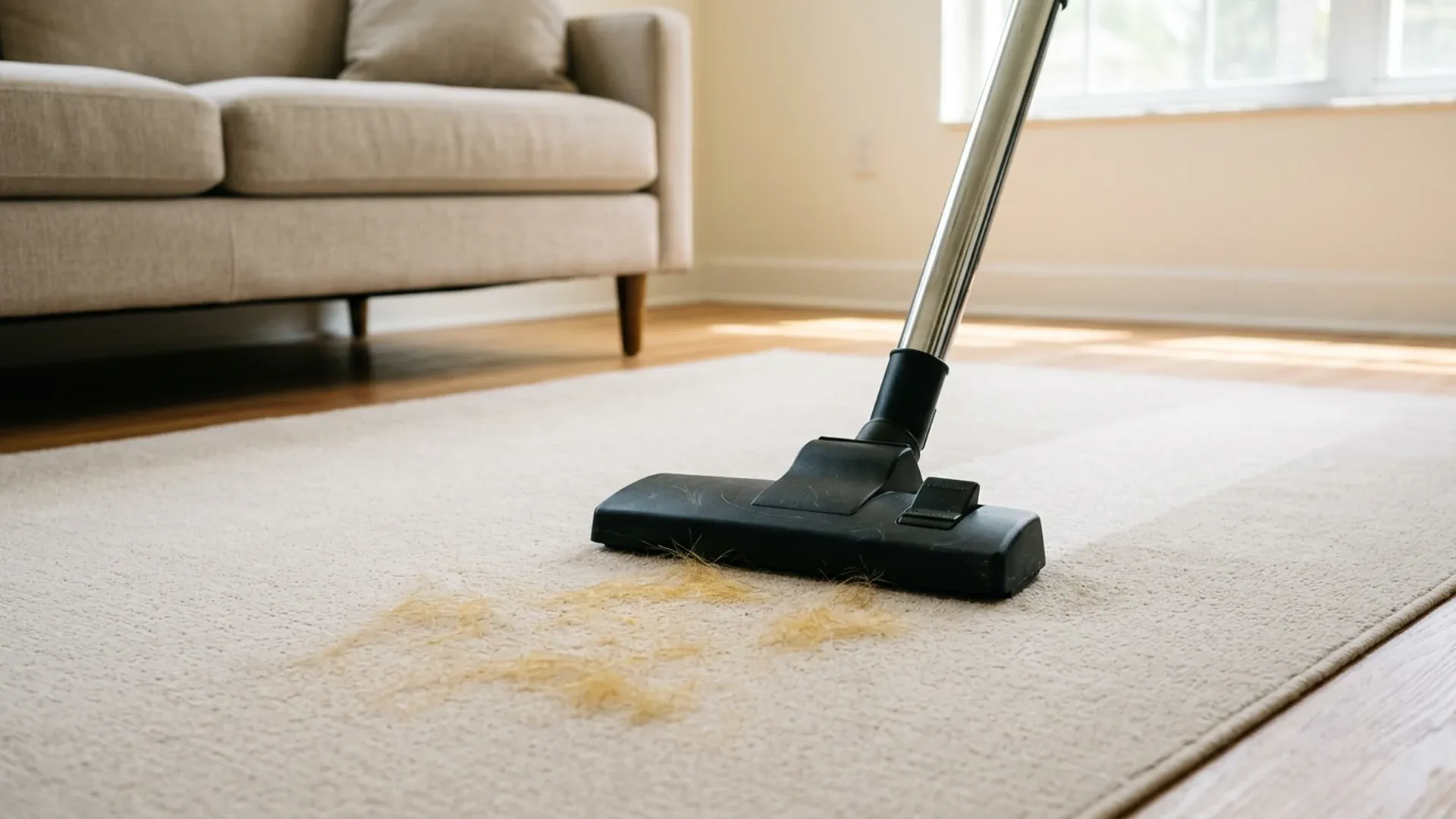
Pet hair removal starts with physical cleaning: collect loose fur, vacuum suitable fabrics, and wipe settled dust before mopping. This tackles visible debris directly instead of trying to cover a stale smell with fragrance. It also makes it easier to see whether a spot needs separate attention.
Work through the places your pet actually uses:
- Vacuum rug edges and sofa seams with suitable attachments.
- Launder washable covers according to their care labels.
- Damp-wipe accessible baseboards and hard surfaces.
- Empty collected debris without scattering it through the room.
Pet friendly house cleaning does not require soaking upholstery. Test compatible products as directed and avoid leaving fabric damp unnecessarily. Our pet-owner cleaning guide explores hair and odor tasks in more detail, while this routine keeps the chemical and waste decisions connected.
What helps cleaning with pets go smoothly?
Cleaning with pets is easier when you agree on access and drying arrangements before opening any supplies. Set up a comfortable separate space with water and familiar bedding, and make sure everyone knows which door must stay closed. Move animals between finished and unfinished areas only when it is appropriate.
For a Tampa Bay household, ventilation should not mean leaving an escape route open. Use a secure arrangement that follows product directions and keeps the animal contained. Tell the cleaning team where pets are resting and whether any animal is nervous around vacuums.
Before reopening a room, check the label's rinsing and reentry requirements, remove tools and buckets, and ensure treated surfaces are ready. Never use a pleasant fragrance as the test. When instructions are unclear, contact the manufacturer or your veterinarian before allowing access.
FAQs about pet friendly house cleaning
Can my dog walk on the floor as soon as it looks dry?
Not necessarily. Follow the cleaner's instructions for rinsing, drying, and animal access rather than relying only on appearance. Keep your dog elsewhere until those requirements are met and supplies are stored away. If the label does not address your concern, ask the manufacturer or your veterinarian before reopening the room.
Are enzyme cleaners harmless if a cat licks them?
No cleaner should be treated as harmless to swallow. The ASPCA says most enzyme-based cleaners tend to cause mild stomach upset and advises allowing treated areas to dry before pets return. Follow the product label, prevent licking during use, and contact your veterinarian promptly if you suspect an exposure.
Should I use air fresheners after cleaning pet areas?
A fragrance is not evidence that pet soil has been removed. Start by cleaning the affected surface with a compatible product and following its directions. Discuss scent sensitivities with your veterinarian, particularly for animals with breathing problems. Do not add concentrated essential oils to cleaning solutions or apply them to pets.
Get Your Free Cleaning Quote
We can help you plan pet friendly house cleaning around your household's priorities. Explore our regular cleaning service, then tell us about your pets, surfaces, and product preferences. For a free quote, contact Kay's Cleaning or call (813) 725-1831. Suspected chemical exposure needs a veterinarian, not a cleaning appointment.
When you ask for a quote, describe the rooms, floor types, and areas where hair collects. Share any product restrictions in advance so we can discuss the cleaning scope before you choose an appointment.
Checked against CDC home cleaning guidance, EPA Safer Choice, ASPCA household product and essential oil guidance, and the Kay's Cleaning Services website in October 2026.
Kayky Andre is the founder of Kays Cleaning Service Pro LLC and a hands-on voice in the home services industry. He built his company from the ground up across Tampa, St. Petersburg, Clearwater, and beyond, driven by one standard: clean the way you'd want your own home cleaned.