How to Remove Construction Dust From Home: Step by Step
Learn how to remove construction dust from home, top to bottom. Get your free cleaning quote from Kay's today. Call (813) 725-1831.
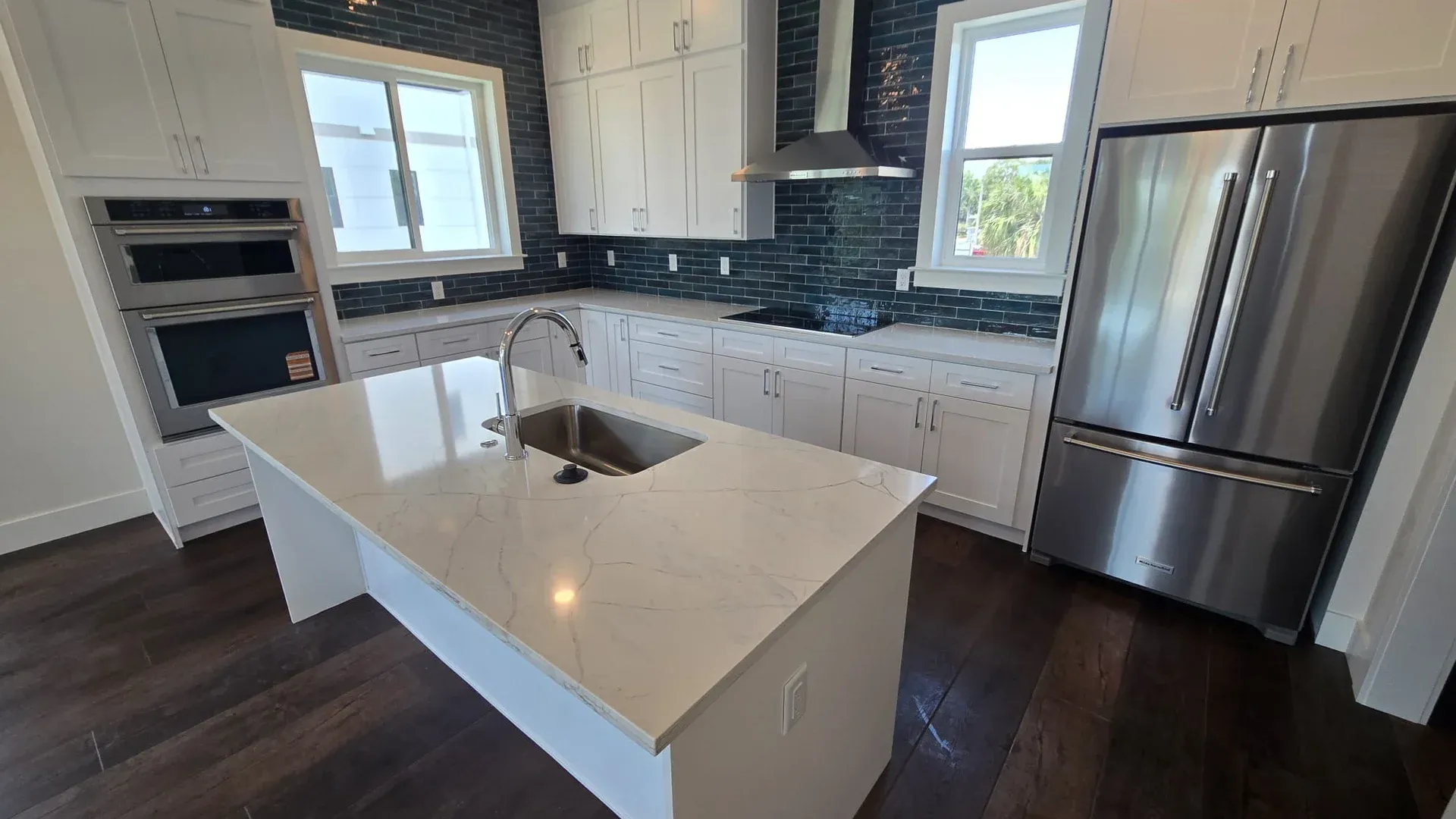
To remove construction dust from home surfaces, work from the top down: ceilings and vents first, then fixtures, windows, walls, cabinets and floors, and finish with filters and a last wipe. Fine dust settles slowly and lands on whatever you cleaned last, so the order of the steps matters more than the effort.
We know a finished build, addition or large remodel leaves a film on everything. This whole-house sequence works room by room. For the wider process, see our complete post-construction cleaning guide. If you are cleaning one remodeled kitchen or bathroom in an occupied house, our post renovation cleaning article covers that case instead.
What is the right order to remove construction dust from home?
The right order to remove construction dust from home is top to bottom, dry before damp, and only after the trades have finished. Dust falls, so cleaning floors first means cleaning them twice. A good construction dust cleanup also waits for any planned sanding, cutting, drilling or touch-up painting.
- Ceilings, fans, vents and light fixtures
- Windows, sills and tracks
- Walls, doors, trim and cabinets
- Floors
- Filters and HVAC returns
- A final wipe and walkthrough
Keep children and pets out of the work area until you finish each step. These steps are the detailed light and final passes of a professional job.
Why use a HEPA vacuum for construction dust?
The best tools to remove construction dust from home capture fine particles instead of moving them: a HEPA vacuum for construction dust with intact seals, clean microfiber cloths, and a barely damp cloth for the second pass. EPA explains that a HEPA filter can theoretically remove at least 99.97% of airborne particles at 0.3 microns. That describes the filter, not a promise that a room is dust free.
Avoid dry sweeping and compressed air. OSHA's silica standard restricts using compressed air to clean surfaces where it could add to worker exposure, with limited exceptions, and the same logic applies at home: blowing dust off a surface only moves it. Rinse and change cloths often rather than shaking them out.
How do you clean ceilings, fans and vents first?
Clean ceilings, fans, vents and light fixtures first, because everything you loosen falls onto the surfaces below. Use a HEPA vacuum with a soft brush attachment on ceiling corners, fan blades and vent covers, then follow with a lightly damp microfiber cloth. Work from a stable step stool and never overreach.
- Wipe fan blades on both sides while supporting each blade.
- Remove light fixture covers if they come off easily, and wash them separately.
- Vacuum and wipe vent covers, but do not open or clean inside the ductwork.
- Wipe the outside of recessed lights and detectors only.
Lay a drop cloth over any floor you have already cleaned.
How do you clean construction dust on window sills and tracks?
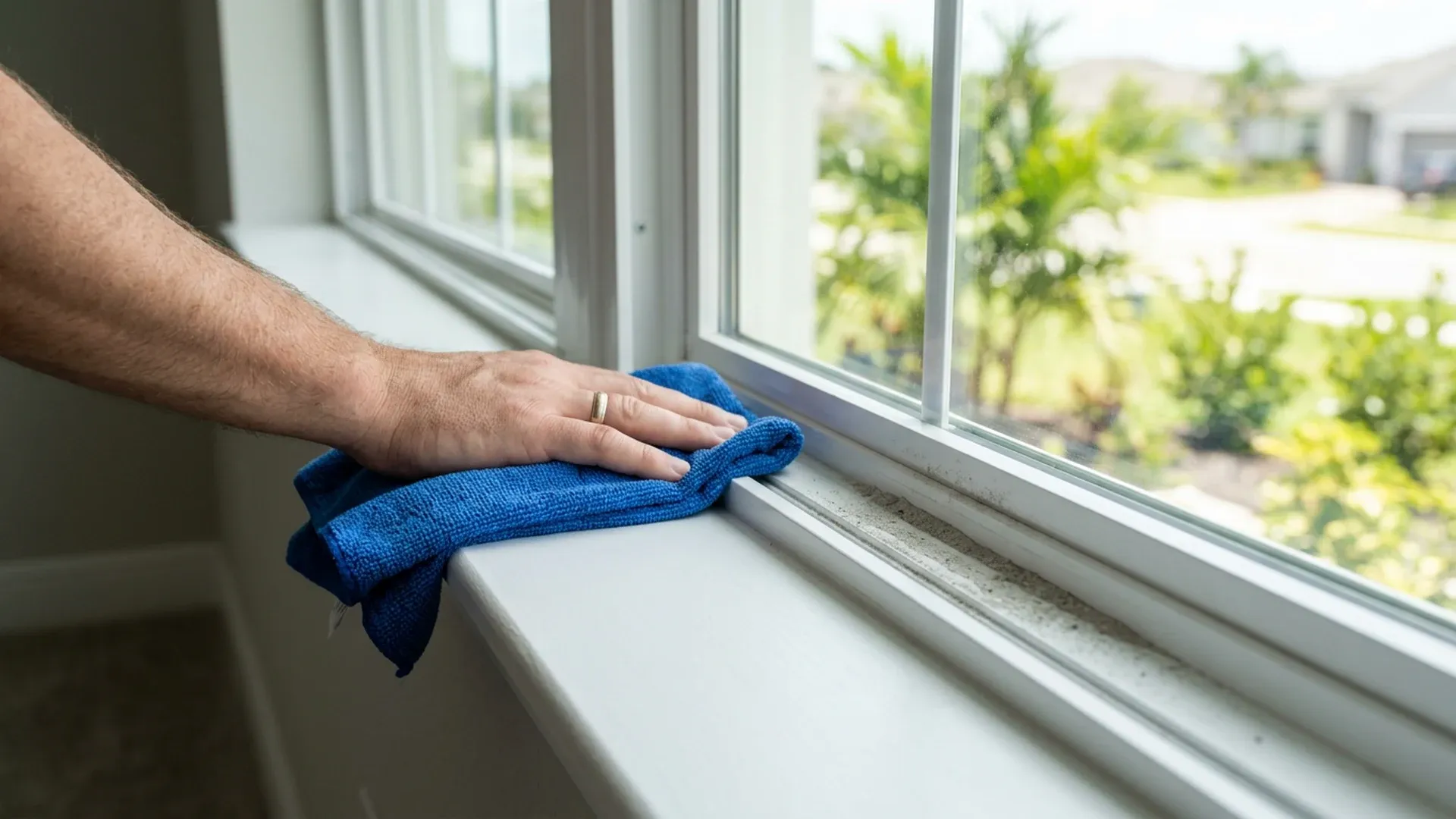
Windows hold the dust that sticks, so clean sills, frames and tracks before the glass. Vacuum the track and sill with a brush attachment, wipe with a damp microfiber cloth, and use a small soft brush or cotton swab in the corners of the track. Clean the glass last so you do not smear dust across it.
Peel stickers and tape residue only with products that are safe for the frame, and test them first in a hidden spot. Check tracks with a flashlight, because a quick wipe rarely reaches the grit at the bottom. If you find paint splatter or a hazy film on the glass, stop and ask the installer how to remove it rather than scraping.
How should you wipe walls, doors, trim and cabinets?
Wipe walls, doors, trim and cabinets from the top down with a clean, barely damp microfiber cloth, turning it often. Drywall dust turns into a paste when the cloth is too wet, and fresh paint may need time to cure before it can be touched, so ask your painter before washing any wall.
- Vacuum cabinet shelves and drawers, then wipe the interiors.
- Wipe door frames, baseboards, switch plates and outlet covers, without spraying liquid near outlets.
- Clean handles and hinges, where dust collects in the seams.
- Check cabinet tops and shelf edges, which are easy to miss.
Follow each surface manufacturer's care instructions, especially for newly installed stone and painted finishes.
How do you clean construction dust from floors without pushing it around?
To clean construction dust from floors, work after the upper surfaces and vacuum before you mop. Make one pass with a HEPA vacuum to lift loose dust, then a second pass along edges, thresholds and under doors. Follow with a damp mop or microfiber pad suited to the material, and change the water as soon as it turns gray.
Hardwood, tile, vinyl plank and carpet each have different care rules, so check the installer's instructions, particularly in the first days after installation. Carpet holds dust deeply, so go slowly and expect more than one pass. Avoid soaking any floor, and never use abrasive pads on new finishes.
Why do filters and HVAC returns matter for construction dust cleanup?
Filters and HVAC returns matter because the air system pulls fine dust through the house and can hold on to it. Vacuum and wipe accessible return grilles and supply registers, then replace the system filter following the manufacturer's instructions. If the system ran during construction, ask your HVAC technician whether the filter needs changing sooner and whether the system should be inspected.
Wiping covers is not duct cleaning, and a cleaning crew should not promise to fix dust inside ductwork. Check the filter again after a few days, since dust keeps settling after you finish cleaning, and note the date of each filter change so you can compare.
What does the final wipe and walkthrough include?
The final wipe is the last step to remove construction dust from home: a second light pass over the surfaces you touch most, done after the dust has had time to settle. Wait several hours, then return with a clean damp cloth and good lighting. Wipe sills, counters, door frames, handles and the first flat surfaces under each vent.
Hold a flashlight low across a surface, because side light shows a film that overhead light hides. Make a short list of anything that needs the contractor, such as paint touch-ups or caulk gaps, and keep it separate from missed cleaning so each item reaches the right person quickly.
When should you call a pro to remove construction dust from home?
You can handle light dust after a small project with a HEPA vacuum and microfiber cloths. Call a professional crew when the project was an addition, a new build or a whole-home remodel, when dust covers every surface or sits inside cabinets, or when you need a handoff-ready result by a deadline. Our crews are insured, bonded and background-checked, use HEPA vacuums and microfiber tools, and follow a 40-point checklist.
One safety note. OSHA's silica standard covers occupational exposure to respirable crystalline silica in construction work, and for pre-1978 homes EPA recommends hiring a lead-safe certified contractor. If either may apply, ask your contractor before cleaning.
Remove construction dust from home FAQ: what do homeowners ask?
How long does construction dust keep settling?
Dust keeps settling for a while after work stops, and foot traffic or airflow can lift it again. Plan one detailed clean when the trades finish and a lighter wipe later. We cannot give a fixed timeline, because it depends on the materials, the size of the project and how well the work area was sealed.
Can I use a regular vacuum to remove construction dust from home?
A regular vacuum may pick up visible debris, but fine dust can pass through a weak filter and return to the air. A vacuum with a sealed HEPA filter is the better choice. Empty it carefully outdoors, and follow with a damp microfiber cloth instead of a dry duster, which tends to stir dust up.
Should I wash walls after construction?
Not always. Vacuum or lightly wipe walls first, then use a barely damp cloth only if the paint has cured. Ask your painter before using any cleaner, because fresh paint can mark or lift. Washing too early can leave streaks, so test a small hidden area before you clean a whole wall.
Ready to remove construction dust from home with a pro crew?
We help Tampa Bay homeowners remove construction dust from home surfaces without guessing about new finishes. Our post-construction cleaning service comes with professional supplies and our 100% Satisfaction Guarantee. For local detail, read our Tampa, Wesley Chapel and St. Petersburg post-construction guides. Get Your Free Cleaning Quote or call (813) 725-1831, and we reply within 1 hour during business hours.
Checked against OSHA 29 CFR 1926.1153 and EPA guidance on HEPA filters and lead-safe renovation in October 2026.
Kayky Andre is the founder of Kays Cleaning Service Pro LLC and a hands-on voice in the home services industry. He built his company from the ground up across Tampa, St. Petersburg, Clearwater, and beyond, driven by one standard: clean the way you'd want your own home cleaned.